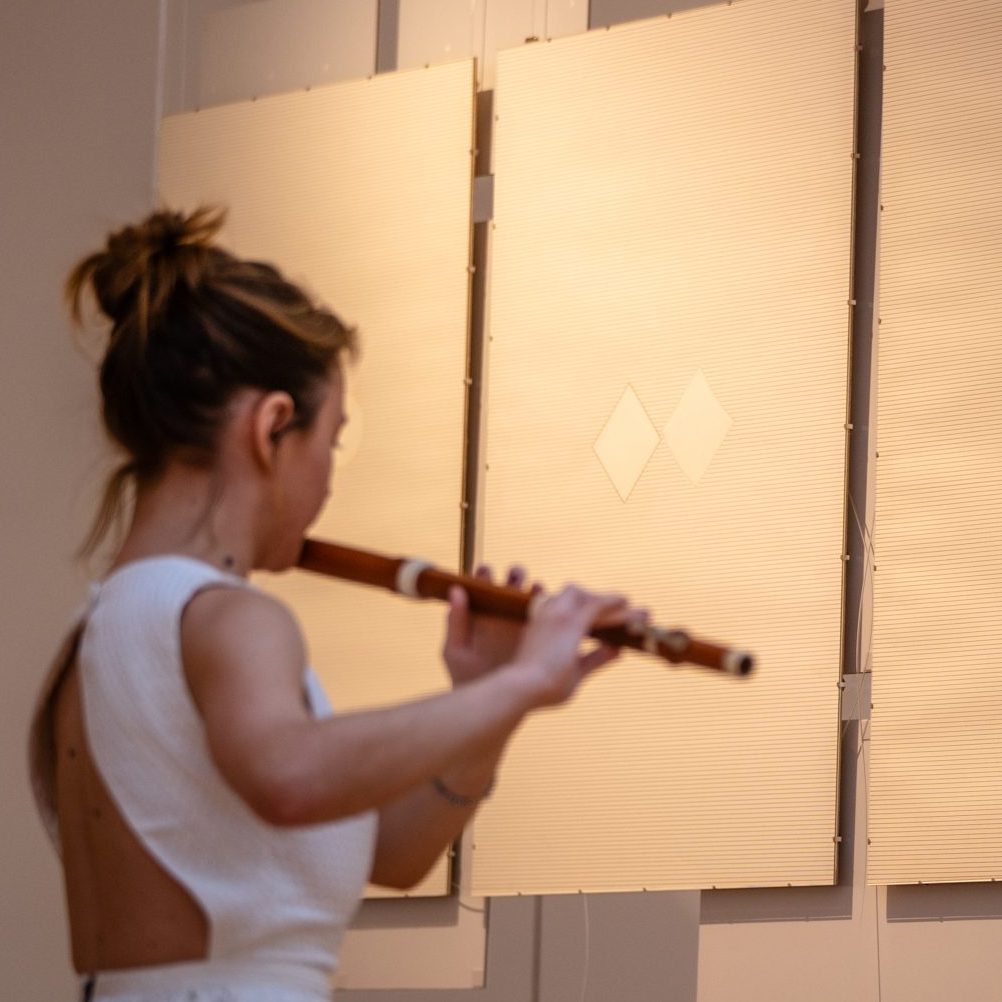
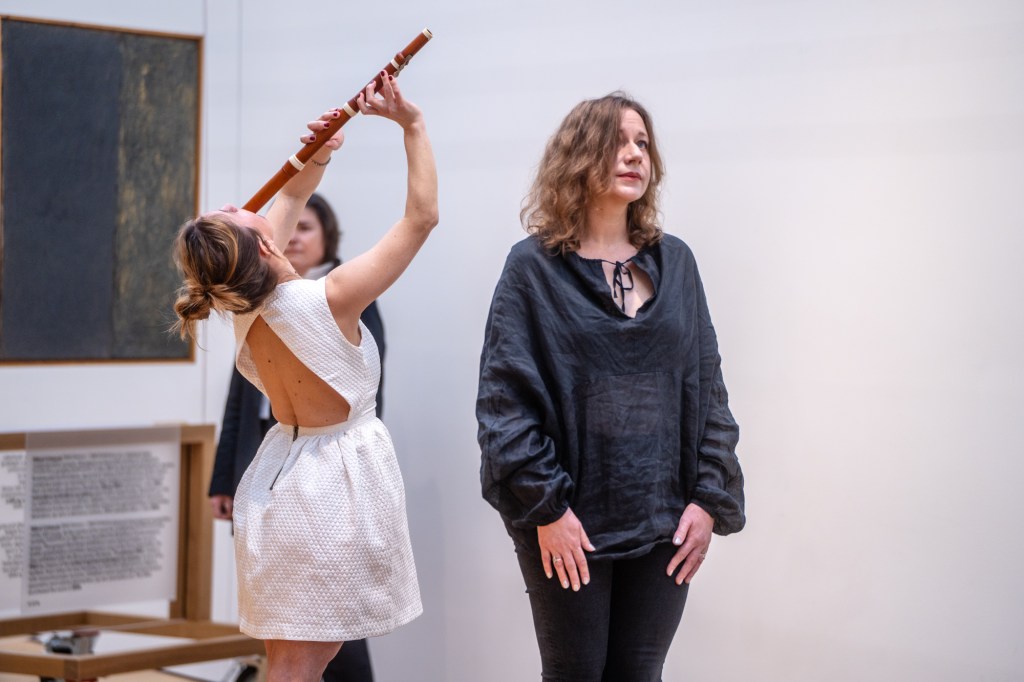
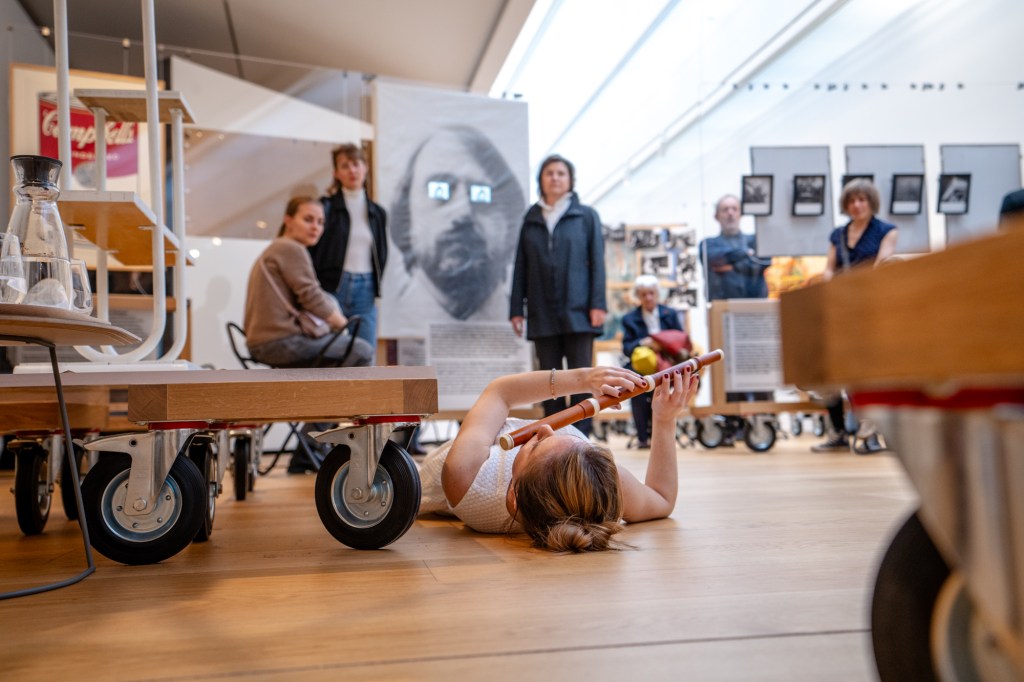
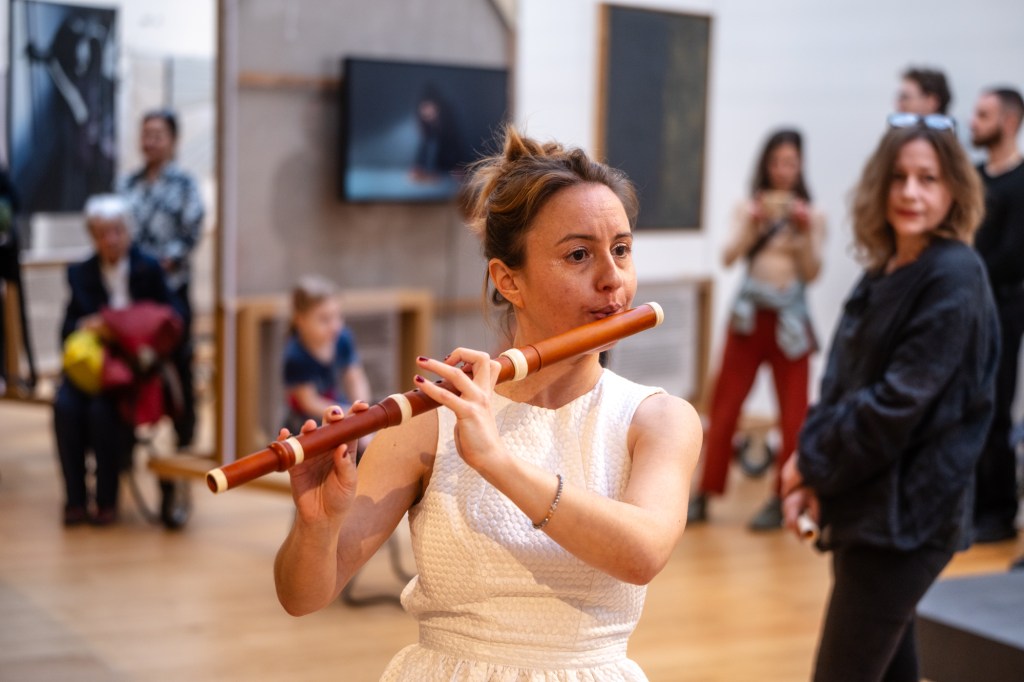
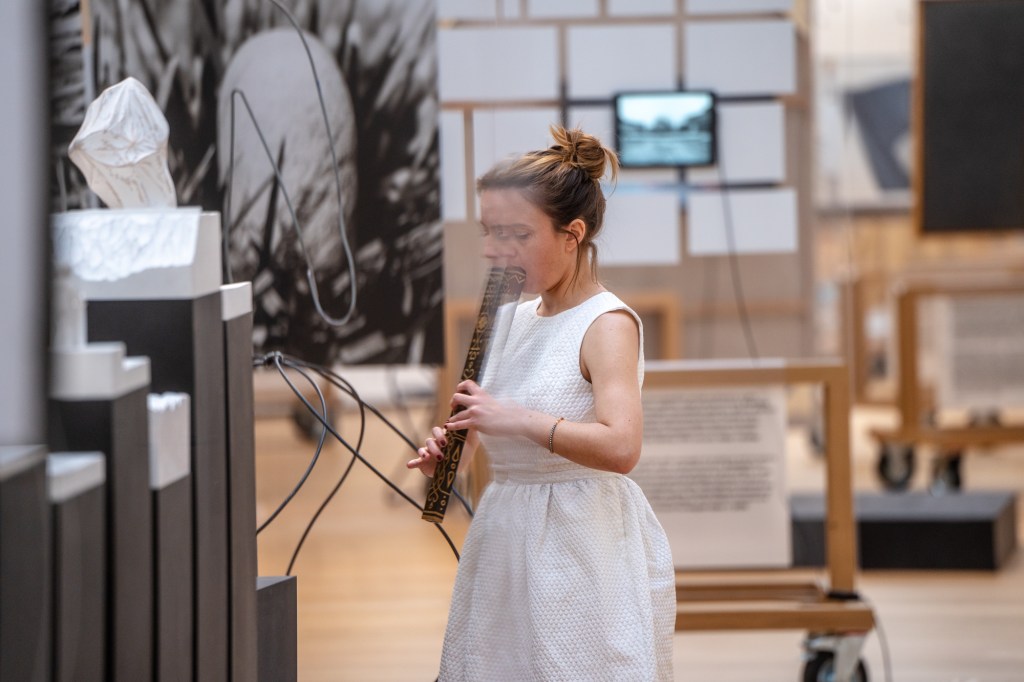
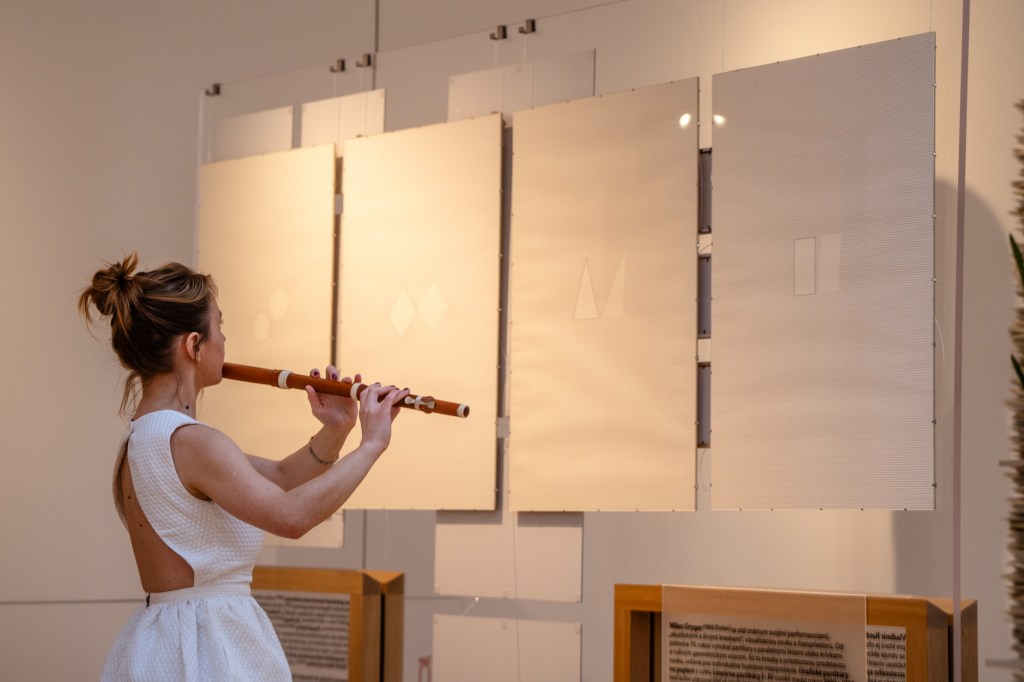
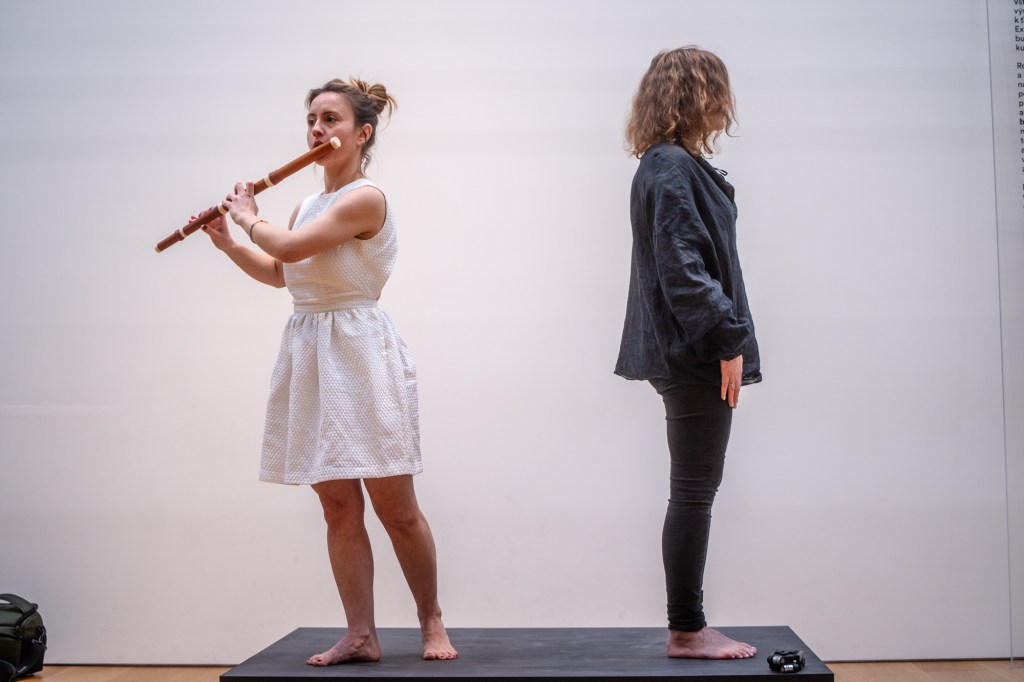
(SK) V nedeľu 2. marca sme realizovali v expozícii Model: Múzeum súčasného umenia performanciu Odtlačky do ticha. V Premostení zazneli do ticha jadrá výpovedí vystavovaných umelcov – slovom, pohybom a hudbou. Spolu s ľuďmi, ktorí prišli, sme prežívali diela inak. Od krehkosti a zváštnej sily znovuzrodenia v Ľudskom vajci Evy Kmentovej, medzistav bytia Anny Daučíkovej až po Lineárne partitúry Milana Grygara.
Krátko na to, počas marca 2025, sa táto výstava stala terčom zjavného nepochopenia a hlbokého nerešpektu voči umeleckým dielam a umeniu samotnému súčasnej, keď na ňu verbálne zaútočila súčasná slovenská vláda. Samotná Slovenská národná galéria bola prvou z veľkých kultúrnych inštitúcií na Slovensku, na ktorú si vláda zasadla a postupne ju v priebehu len niekoľkých mesiacov svojimi totalitnými praktikami rozložila, najprv vyhodením tých najkompetentnejších zamestnancov až kým nedali na protest výpoveď takmer všetci bývalí-súčasní zamestanci (desiatky ľudí) a momentálnym dosadením “svojich” ľudí. V momentálnej situácii sú vystavované diela ohrozené aj fyzicky a prakticky, keďže dosadením “svojich” vládnych ľudí stratila Slovenská národná galéria kompetentných ľudí, odborníkov a kurátorov.
Nasledujúci text je výpoveďou a protestným textom kurátorky výstavy Lucie Gregorovej Stach, s ktorou sme realizovali spomínanú performaciu odtlačky do ticha.
(EN) On Sunday 2nd March we realized our performance odtlačky do ticha (imprints into silence) in the space of the exhibition ´Model: Museum of contemporary art´ (Model: Múzeum súčasného umenia) in the Slovak national gallery in Bratislava. We have experienced the artworks with the people who came through a different lense. From the fragility and strange power of rebirth in ´Human Egg´ by Eva Kmetová, through in-between-state of being by Anna Daučíková until the ´Linear Scores´ by Milan Grygar.
Shortly after the performance, during March 2025, this exhibition has become the target of deep misunderstanding and disrespect for the artworks and art itself, when it was verbally attacked by the current Slovak government. The Slovak National Gallery itself was the first of the major cultural institutions in Slovakia to be seized by the government and gradually dismantled with its totalitarian practices in just a few months, first by firing the most competent employees until almost all former-current employees (dozens of people) resigned in protest while being replaced by “their” (the government´s) people. In the current situation, the exhibited works are also physically and practically threatened, as the Slovak National Gallery has lost competent people, experts, and curators by the move of the Slovak government who set on these positions “their” own people.
The following text is a statement and protest text by the curator of the exhibition, Lucia Gregorová Stach, with whom we realized the aforementioned performance imprints into silence.
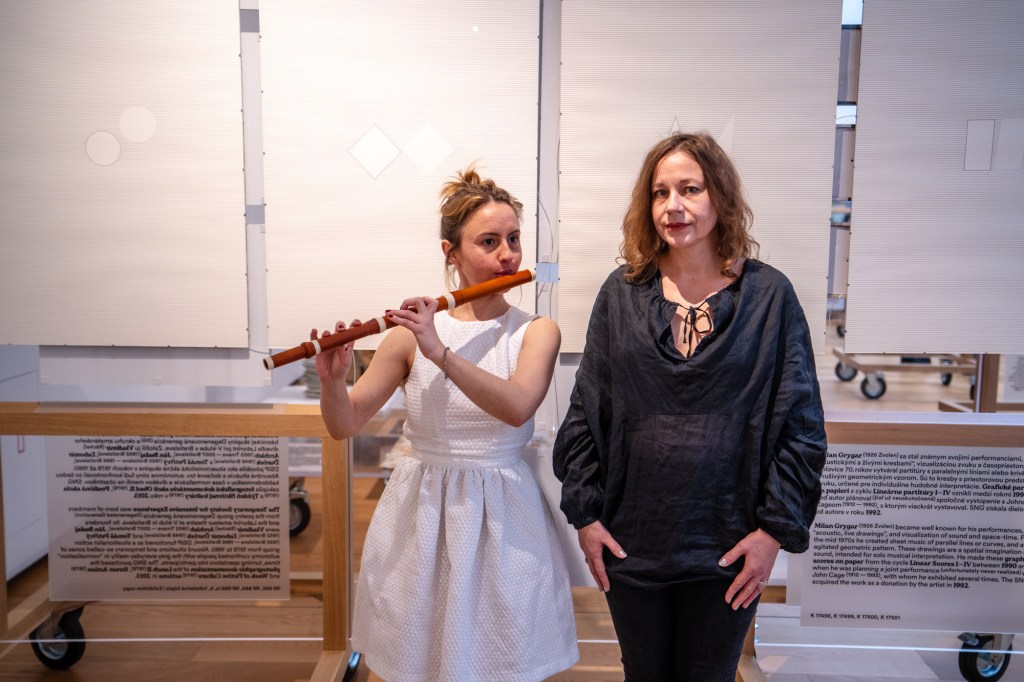
V expozícii má každé dielo namiesto bežnej popisky krátky text objasňujúci kontext jeho
vzniku a základný zámer autorského vyjadrenia. Nemohli by ste si to nevšimnúť. Tak napríklad: znaky dvoch ľudských pohlaví z prírodnín v krajine sú poctou prírode a jej prirodzenej tvorivej sile. Sú o slobode, ktorý poskytla počas normalizácie umelcom a nielen im. Kamene v tráve nie sú vulgárne, ak si do nich nepremietame niečo také sami.
Dielo Jany Želibskej Kus zeme z roku 1974 využíva znak, ktorým oslavovala ženskosť a emancipáciu aj sexuálnej túžby žien v patriarchálnom svete, ale nič oplzlé nikdy jej tvorba neobsahuje. Kosoštvorce predsa bývali tvarom erbov aj francúzskych ženských kláštorov. Symbol vzbudzuje v niektorých kultúrach dodnes úctu k žene a k prírode ako Veľkej Matke.
Rómska umelkyňa Bari Raklori (Emília Rigová), ktorá na kolenách vracia zlato tradične spájané s
rómskym etnikom, s “cigánmi”, sa s nami delí o bolestivú skúsenosť mladej ženy (a mnohých Rómov) na Slovensku, zápasiacej s tým ako sa narodila, pretože je v našej krajine ťažké s touto identitou – nálepkou – žiť. Akoby v sebatrýznivom akte stvárňovala dookola svoj osobný žalm De profundis. Prežíva konverziu, snaží sa odmietnuť ale aj prijať to, čo je neprijateľné.
Telo muža, ktoré kamera skúma ako krajinu vo videu Koža, je poéziou o vlastnom živote a starnutí. Na starobe ani na nahote nie je nič neslušné. Je to dielo Iona Grigorescua, jedného z najvýznamnejších rumunských umelcov, ktorý bojoval tvorbou proti Caucescovmu režimu. Mohli by sme pokračovať.
In the exhibition, instead of the usual caption, each artwork has a short text explaining the context of its creation and the basic artistic statement of its author. You could not but notice it surely. For example: the signs of the two human genders from natural objects in the landscape are a tribute to nature and its creative power. They are about the freedom it provided to artists (and not only to them) during normalization. Stones in the grass are not vulgar if we do not project something like that ourselves.
Jana Želibská’s work ´A Piece of Earth´ from 1974 uses a symbol with which she celebrated femininity and the emancipation of women’s sexual desire in a patriarchal world, but her work never contains anything obscene. After all, rhombuses used to be the shape of coats of arms of French nunneries. In some cultures this symbol still inspires respect for women and nature as the Great Mother.
Roma artist Bari Raklori (Emília Rigová), who on her knees vomits the gold – which is traditionally associated with the Roma ethnic group, with “gypsies”, shares with us the painful experience of a young woman (and many Roma) in Slovakia, struggling with how she was born, because it is difficult to live with this identity – a label – in our country. As if in a self-torturing act, she is reenacting her personal psalm De profundis. She is going through a conversion, trying to reject but also accept what is unacceptable.
The man’s body, explored on the camera as a landscape in the video Skin, is poetry about one’s own life and aging. There is nothing indecent about old age or nudity. It is the work of Ion Grigorescu, one of the most important Romanian artists, who with his work fought against the Caucus regime. And we could go on, talking about each exhibited artwork.
Ide o rozmanitosť a otvorenosť autentických výpovedi skutočných ľudí z rôznych prostredí a o
rôznych aspektoch života a ľudskosti. Áno, aj o bolesti, vzťahoch, útlaku, smrti. Tiež o láske, o vesmíre, o ľudskej sile, o odvahe postaviť sa zlu, kritizovať štát a ideologický nespravodlivý režim. Napríklad aj objektmi rockových hudobných nástrojov z nájdených predmetov, s kosákom a kladivom a okrem iného aj s so smiešnou atrapou penisu – dildom. Ironická hračka s prišpendlenými odznakmi hovorí o nadvláde hlúposti a o moci strachu. Nie je všetko, diela musíme posúdiť naživo, prečítať, precítiť. Sú tam niektoré o vojne a o strachu z budúcnosti, iné o osobnom vyrovnávaní sa s politickou minulosťou štátu, ďalšie o smútku a samote, o okupácii, niekoľké tiež o radosti zo znovuzrodenia v duchovnom zmysle.
It is about the diversity and openness of authentic statements by real people from different backgrounds and about different aspects of life and humanity. Yes, also about pain, relationships, oppression, death. Also about love, about the universe, about human strength, about the courage to stand up to evil, to criticize the state and the ideologically unjust regime. For example, with objects of rock musical instruments made from found objects, with a sickle and a hammer and, among other things, with a ridiculous dummy penis – a dildo. An ironic toy with pinned badges speaks about the domination of stupidity and the power of fear. This is not everything, we have to see these works live, read them, feel them. Some are about war and fear about the future, some about personal dealing with the political past of the state, some about sadness and loneliness, about occupation, and a few also about the joy of spiritual rebirth.
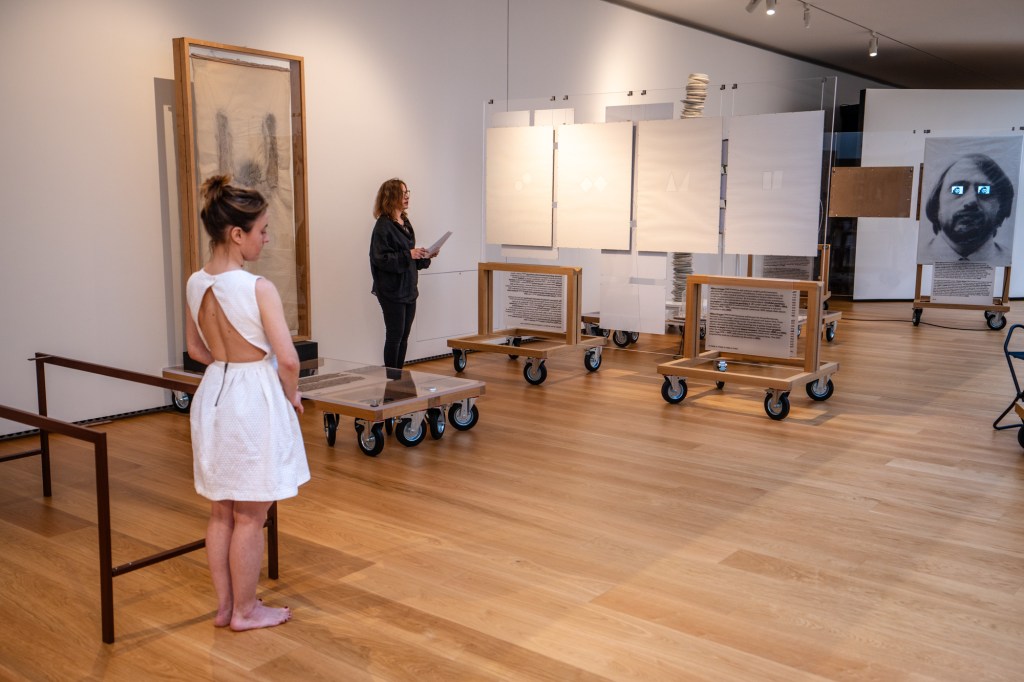
Expozícia je pohyblivá, mení sa v čase, diela sa striedajú, dejú sa v nej živé programy a výklady.
Umožňuje nám vytvoriť si vlastnú trasu a nájsť si to, čo nás osloví. Nie všetko sa musí každému páčiť. Nie na všetko musíme mať trpezlivosť porozumieť. Sú tam diela výrazné ale aj skryté “šperky”. Nemali by sme sa nechať znechutiť a zmanipulovať názormi, ktoré veci zjednodušujú na neprijateľnú mieru.
Pokojne si vyberme aj to, čo vás neosloví a nepáči sa vám, s čím nesúhlasíte. Práve o stretnutí
rozmanitých postojov, obrazov a myšlienok na jednom mieste, o ich komunikácii navzájom a diváckej slobodnej možnosti voľby, je expozícia o našej súčasnosti. Nie sme jednoduché organizmy s rovnakými životmi, ani nežijeme v ideálnom nudnom svete. Otvorme svoje vnímanie a buďme ľuďmi, schopnými kriticky myslieť a utvárať si názory na základe skúseností a vedomostí, ale aj ochotnými učiť sa nové veci a nechať na seba pôsobiť jemné nuansy v zážitku napríklad aj z umenia.
The exhibition is mobile, it changes, the works alternate, there are live programs and interpretations.
It allows us to create our own route and find what appeals to us. Not everyone has to like everything. We do not have to have the patience to understand everything. There are striking works but also hidden “jewels”. We should not let ourselves be disgusted and manipulated by opinions that simplify things to an unacceptable level.
Feel free to choose also what does not appeal to you and what you don’t like, what you don’t agree with. Exactly because of the meeting of diverse attitudes, images and ideas in one place, about their communication with each other and the viewer’s free choice is this exhibition about our present. We are not simple organisms with the same lives, nor do we live in an ideal boring world. Let’s open our perceptions and be ahumans capable of thinking critically and forming opinions based on experience and knowledge, but also willing to learn new things and be influenced by subtle nuances in experiences, for example experiences from art.
Prečo nazývam postoj ministerských predstaviteľov nacistickým? Lebo z dôvodu vlastnej obmedzenosti
v predstavivosti, vzdelaní, zvedavosti a tvorivom myslení sa snaží ľuďom lacno predať svoj vulgárny výber a jeho interpretáciu. Dovoľujú si vyvodiť z toho závery o kvalite umeleckých diel, o práci inštitúcie a znevažovať tých, čo sa v minulosti nebáli hovoriť pravdu a v súčasnosti dokážu sprostredkovať myšlienky a obrazy, ktorými žijeme: niekedy citlivo, inokedy drásavo a znepokojivo.
Nahradiť ich má nejaké “pekné” národné umenie. Vládni úradníci nám vnucujú ochudobňujuci pohľad na svet. Boja sa toho skutočného? Pred čím a kým nás chcú ochrániť? Čo zamlčať?
Zážitky z kvalitného umenia, hoci aj s drsným obsahom, nás tiež obohacujú, povznášajú a vzdelávajú, prehlbujú našu ľudskosť o nové rozmery. Buďme dosť odvážni, aby sme vnímali aj ľudí iných od nás samotných, ich životy a skúsenosti. Nič z nás neubudne, naopak. Nebojme sa hovoriť nielen o krásnych ale aj o smutných témach. Nenechajme iných ľudí rozhodovať namiesto nás o tom, o čom sa môže a o čom nemôže verejne a umelecky vyjadrovať, čo nás môže a čo nesmie osloviť. Vždy vychádzajme z vlastného poznania.
marec 2025, Bratislava
Why do I call the attitude of ministry representatives a nazi attitude? Because, due to their own limitations
in imagination, education, curiosity and creative thinking, they try to cheaply sell to people their vulgar selection and its interpretation. Based on that, they dare to draw conclusions about the quality of the artworks, about the work of the institution (the Slovak national gallery) and disparage those who were in the past regime not afraid to speak the truth and who are in the present able to convey the ideas and images which we live: sometimes sensitively, sometimes poignantly and disturbingly. And now, some “nice” national art is supposed to replace them. Government officials are imposing on us an impoverishing view of the world. Are they afraid of the real thing? What and who do they want to protect us from? What to keep silent about?
Experiencing real quality art, even with harsh content, enriches, elevates and educates us, deepens our humanity with new dimensions. May we be brave enough to perceive people other than ourselves, their lives and experiences. We will not loose anything, on the contrary. May we not be afraid to talk not only about the beautiful but also about the sad. May we not let other people decide for us what can and cannot be expressed publicly and artistically, what can and cannot appeal to us. May we always come from our deep experience and knowledge.
text, živý výklad, kurátor výstavy: Lucia Gregorová Stach | hudba, kompozícia, pohyb: Dorota Matejová | fotodokumentácia: Šimon Lupták
text, live guidance, curator of the exhibition: Lucia Gregorová Stach | music, composition, movement: Dorota Matejová | photodocumentation: Šimon Lupták
 music x movement x poetry • by Dorota Márföldi-Matejová